Your People, Your Critics: The Complicated Truth About Dating Inside a Tight-Knit Community
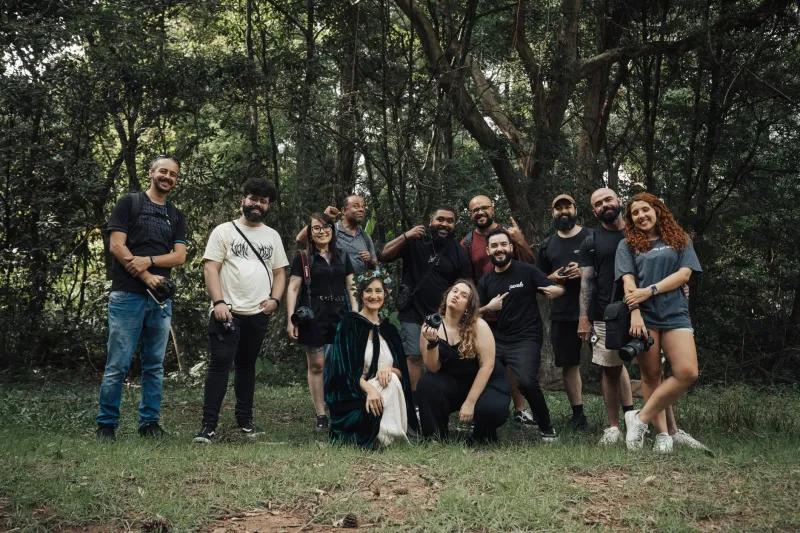
There's something genuinely magical about being around people who just get it. Whether your world revolves around competitive tabletop gaming, vintage car restoration, amateur astronomy, or any of the thousand other niche communities that quietly shape American social life, you know the feeling. You don't have to explain yourself. You don't have to translate. Someone across a crowded room makes a reference that would mean nothing to 99% of the population, and you laugh before they even finish the sentence.
Now imagine falling in love inside that room.
For a lot of niche daters, that scenario sounds like a dream. And in some ways, it absolutely is. But there's a flip side that doesn't get talked about nearly enough — one that can quietly poison the well before a relationship even gets started.
Your community is full of people who understand you deeply. It's also full of people who think they have the right to weigh in on your love life.
The Gift of Being Understood
Let's start with the good stuff, because it's real and it matters.
When you date someone inside your niche, you skip a layer of relationship work that most couples spend years on. The translation problem — that exhausting process of explaining why something matters to you, why you spend your weekends that way, why you light up when a certain topic comes up — largely disappears. Your partner already lives in that world. They don't need the backstory.
That kind of baseline understanding creates intimacy fast. Shared language, shared references, shared stakes. When something big happens in your community — a major event, a controversy, a milestone — you're both feeling it. You process it together in real time rather than one person explaining it to a politely interested outsider.
For people whose niche is genuinely central to their identity, this isn't a small thing. It's the difference between a partner who tolerates your passions and one who shares them. That's a meaningful distinction.
The Weight of the Crowd
Here's where it gets complicated.
Niche communities are small by definition. People know each other. Reputations travel. And when two people start dating inside that ecosystem, everyone notices — and everyone has a take.
Maybe your new person had a falling out with a respected member of the group two years ago. Maybe they hold an unpopular opinion about something central to the community's identity. Maybe they're newer to the scene and some longtime members haven't fully accepted them yet. None of these things necessarily say anything meaningful about whether they'd be a good partner for you. But inside a tight-knit world, those social histories have weight. And the people around you won't always keep their assessments to themselves.
This is the gatekeeping paradox in action: the same closeness that makes your community a rich place to find love also makes it a pressure cooker once you do.
Suddenly your relationship isn't just between two people. It's a community event. And the community, consciously or not, is grading it.
When "They Don't Fit" Really Means "We Don't Approve"
One of the trickiest things about community pressure is how it disguises itself as legitimate concern.
"I just don't think they're really one of us" sounds like insight. "You could do better within the community" sounds like friendly advice. But a lot of the time, what's actually happening is social gatekeeping dressed up as relationship wisdom.
Niche communities develop their own internal hierarchies — who's been around longest, who has the most credibility, who's considered a true believer versus a casual participant. When someone in your life doesn't rank high enough on that invisible ladder, the community can push back on your relationship in ways that feel personal but are really about status.
The problem is that those judgments can get into your head. You start second-guessing someone who was perfectly great before the crowd weighed in. You start seeing them through the community's eyes instead of your own. And before long, you've talked yourself out of something real because the social math didn't add up for other people.
Protecting Your Relationship From the Peanut Gallery
So how do you hold onto the genuine benefits of dating inside your world without letting the community become a third party in your relationship?
Establish private space early. This sounds simple but matters enormously. Make sure you and your partner have time together that isn't community-adjacent — dinners, trips, conversations that aren't about the scene you both move through. It's easy in niche relationships for the shared interest to become the entire relationship. Don't let that happen. You're dating a person, not a fellow community member.
Get honest about whose opinion you actually trust. Not every voice in your community deserves equal weight. There's a difference between a close friend who knows you well and genuinely wants you to be happy, and an acquaintance who's been around forever and thinks that gives them authority over your choices. When feedback starts rolling in, ask yourself: does this person actually know me? Do they know us as a couple? Or are they reacting to community politics more than anything else?
Watch for the difference between a red flag and a social penalty. Real red flags — patterns of dishonesty, disrespect, incompatibility in values — are worth taking seriously no matter where they come from. But "people in our community don't really trust them" is a social penalty, not a red flag. Those are different things, and conflating them can cost you a genuinely good relationship.
Talk to your partner about the dynamic. If you're both inside the community, you're both navigating this pressure. Acknowledging it openly — "hey, I know there's some weird history between you and so-and-so, and I want you to know that's not how I see you" — can do a lot to build trust and signal that you're in their corner.
The Paradox Is the Point
Here's the thing about the gatekeeping paradox: it doesn't resolve neatly. Your community will always be both the best possible source of a partner who truly understands you and a complicated social force with its own agendas and blind spots. Those two things coexist. They always will.
The goal isn't to ignore your community or to surrender to it. It's to stay clear-eyed about what you're actually navigating. The people around you can offer genuine perspective — and they can also project their own stuff onto your love life in ways that have nothing to do with your actual happiness.
Learning to tell the difference? That might be the most useful dating skill you develop inside your niche world.
Your community brought you to the table. But what happens at that table is between you and the person sitting across from it.