Why Your Perfect Match Probably Obsesses Over Your Favorite Thing in All the Wrong Ways
Here's a scenario that plays out constantly in niche communities: two people meet, discover they're both deeply into the same thing — same fandom, same hobby, same subculture — and immediately assume they've found their person. Six months later, they're driving each other absolutely crazy. Meanwhile, somewhere across the room at that same convention or meetup, a die-hard collector is falling for someone who only got into the hobby last year. And somehow, that relationship is the one that goes the distance.
It sounds backwards. But spend any time talking to couples who met through niche communities, and you start to notice a pattern that nobody really talks about: the "perfect on paper" match often crumbles, while the unexpected pairing — the superfan and the casual enthusiast, the creator and the audience member, the theorist and the hobbyist — somehow works.
The "Too Much Alike" Problem Nobody Warns You About
When you're deep in a niche, your passion isn't just a hobby. It's a lens through which you see the world. It shapes your schedule, your social circle, your spending habits, your opinions. So when you meet someone who's equally deep in the same thing, there's an intoxicating sense of recognition. Finally, someone who gets it.
But here's the catch: two people who are both deeply invested in the same thing often come loaded with strong opinions, established routines, and a very particular way of engaging with their shared interest. And those particulars? They clash. The tabletop RPG player who prefers rules-heavy systems meets another tabletop player who's all about narrative improv. The film buff who loves meticulous frame-by-frame analysis falls for someone who also loves film — but thinks overanalyzing it ruins the magic. Same passion. Completely incompatible approaches.
There's also a subtle competitive energy that can creep in. Who knows more? Who got there first? Who's the "real" fan? In tight-knit communities, these hierarchies exist whether people acknowledge them or not. When both partners are jockeying for the same position in that hierarchy, even unconsciously, it creates friction that has nothing to do with how compatible they actually are as people.
Why Opposite Approaches to the Same Thing Actually Work
Consider the dynamic between a creator and a consumer within the same niche. One person makes the thing — the art, the music, the content, the custom builds — and the other person genuinely loves experiencing it. These two aren't competing. They're complementary. The creator gets an engaged, appreciative audience in their own home. The consumer gets an inside look at a process they find fascinating. Each one offers the other something they genuinely can't give themselves.
Or think about the hardcore enthusiast paired with someone newer to the interest. The veteran gets to rediscover their passion through fresh eyes. The newcomer gets a knowledgeable, enthusiastic guide who actually cares about sharing what they love. There's a natural give-and-take that keeps both people engaged — and keeps the relationship from stagnating into an echo chamber.
Psychologists have a term for this kind of dynamic: complementarity. The idea that we're often more satisfied by relationships where our differences fit together rather than relationships where everything mirrors back at us. In niche dating, this plays out in a very specific way. Sharing the core passion creates the initial bond and the ongoing common ground. But differing in how you engage with that passion creates the space for each person to bring something unique to the table.
Real Couples, Unexpected Combinations
Talk to people who met through shared niche interests and you'll hear this story over and over in different forms.
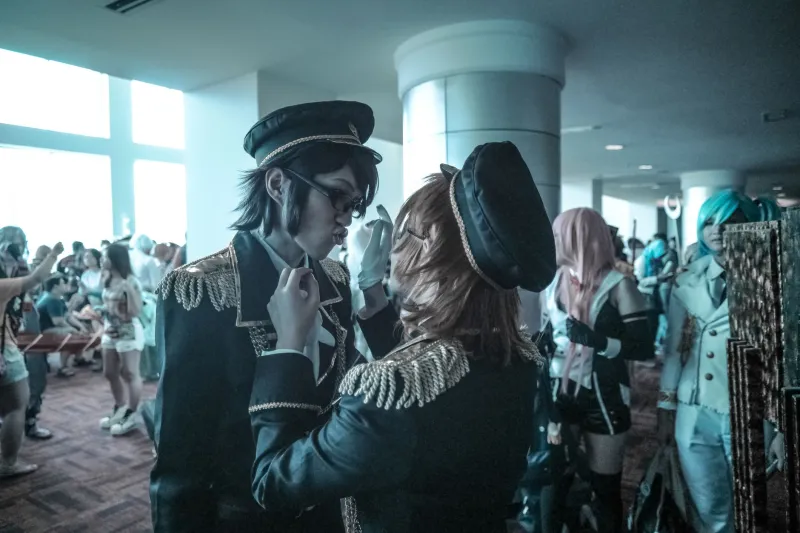
A competitive cosplayer who's been building elaborate costumes for fifteen years ends up with someone who only started attending cons a couple of years ago. The experienced cosplayer admits that dating someone at the exact same level felt exhausting — there was always an unspoken comparison happening. With their current partner, who approaches cosplay more casually, they feel free to just love what they do without it becoming a measuring contest.
A serious home brewer who can talk hops and fermentation chemistry for hours finds their person in someone who simply loves drinking interesting beer and asking questions. The brewer finally has a genuine audience. Their partner finally has someone who makes their hobby feel like an adventure rather than homework.
A hardcore strategy gamer who dissects every mechanic pairs up with someone who plays games mostly for the story and the vibe. They fight about this sometimes, sure. But they also push each other — one learning to slow down and appreciate narrative, the other learning to engage more critically with design. Neither one would have grown that way with an identical clone of themselves.
What This Means for How You Date in Your Community
If you're doing the niche dating thing — and if you're here, you probably are — it might be worth loosening the filter a little. That checklist of specific knowledge, specific experience level, specific approach? It might be screening out exactly the person who'd keep you genuinely interested for years.
This doesn't mean dating someone who's completely indifferent to what you care about. Shared passion still matters. It's the foundation. But within that shared passion, diversity of approach isn't a dealbreaker — it might be the whole point.
Ask yourself: do you want someone to agree with everything you think about your niche, or do you want someone who makes you think about it differently? Do you want to feel like the most knowledgeable person in the relationship, or do you want to be genuinely surprised sometimes? Do you want a mirror, or do you want a window?
The Paradox, Unpacked
The niche dating paradox isn't really that mysterious once you look at it straight. Finding someone "just like you" — same passion, same depth, same approach — sounds ideal because it promises zero friction around the thing you care most about. But real compatibility isn't frictionless. It's generative. It creates something between two people that neither one had alone.
The couples who make it work aren't the ones who found their exact replica. They're the ones who found someone who cares about the same thing they do, but sees it through a completely different window. And in that gap between their two perspectives, they built something neither one of them could have built alone.
So next time you're scanning profiles or scanning a room at your next community event, maybe don't immediately skip past the person who loves your thing but loves it differently than you do. That difference might be exactly what you've been looking for.