Why the Best Relationship You'll Ever Have Might Start Outside Your World

Photo by Photo by Priscilla Du Preez 🇨🇦 on Unsplash on Unsplash
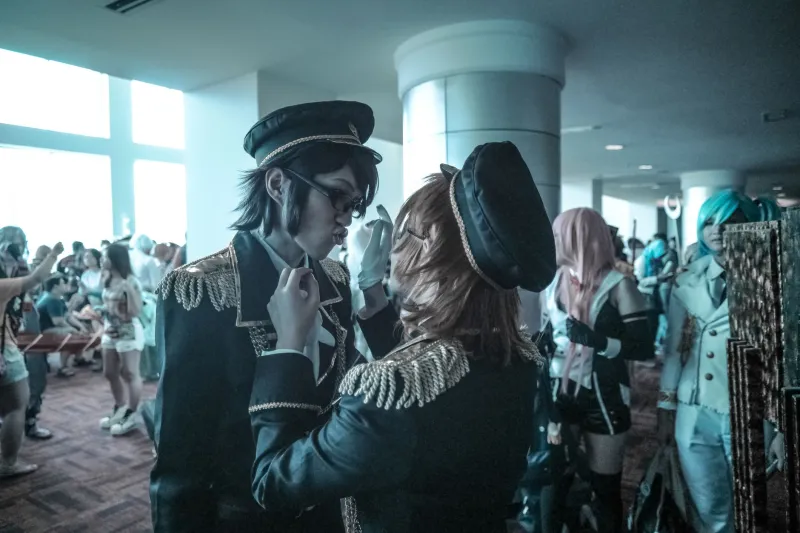
Let's say you're deep into competitive miniature painting. Or you've spent the last decade building the most obscure vinyl collection in your zip code. Maybe you're a serious larper, a homebrewer, a cosplayer, or someone who can recite every line from a film franchise most people have never heard of.
You've probably assumed — reasonably — that your ideal partner would share that same obsession. Someone who just gets it without needing a twenty-minute explainer. Someone who'd be excited to go to the same events, speak the same shorthand, and geek out alongside you at 1 a.m.
Here's the thing, though: that's not usually how it plays out. And the research, along with a whole lot of real-world couples, suggests that might actually be a good thing.
The Numbers That Might Surprise You
Studies on long-term relationship satisfaction consistently point to shared values — not shared hobbies — as the strongest predictor of lasting compatibility. Things like how you handle conflict, what you believe about family, how you think about money, and whether your communication styles are even remotely compatible. These are the fault lines that make or break relationships.
Interest overlap, it turns out, is a much weaker predictor. In fact, some research suggests that couples with too much overlap in their core identity interests can actually struggle more — there's less room to grow, more competition, and a higher chance that one person's evolution in the hobby creates friction with the other.
In niche communities specifically, the dating pool is small. When things go sideways — and sometimes they do — the social fallout hits harder and travels faster. Plenty of people who've dated inside their scene know exactly what that feels like.
Why "Doesn't Get It" Doesn't Mean "Wrong Person"
There's a difference between a partner who doesn't share your passion and a partner who doesn't respect it. That distinction matters enormously.
Someone who thinks your niche is kind of weird but loves watching you light up when you talk about it? That's not a dealbreaker. That's actually a pretty solid foundation. They're seeing you — not just the thing you're into — and choosing to be enthusiastic about your enthusiasm. That's a rare and underrated quality.
Contrast that with someone who shares your interest on paper but subtly competes with you, dismisses your approach, or uses the shared hobby as a way to keep score. Same niche, completely different relationship.
The version of you that exists outside your community — how you treat people, what you care about, what you do when things get hard — that's who your partner is actually dating. Your niche is a part of you, not the whole story.
The "Translator" Dynamic (And Why It Can Strengthen a Relationship)
One thing that comes up a lot among couples where only one partner is deep in a niche? The translator dynamic. The person who's passionate about something has to learn how to explain it in ways that are accessible and meaningful to someone who doesn't have the background. That's actually a communication skill.
It forces you to articulate why something matters to you, not just what it is. And that kind of clarity — knowing how to share your world with someone who wasn't already in it — tends to make you a better communicator overall.
A lot of niche hobbyists also report that having a partner outside the scene gives them a healthy outlet. Someone who offers perspective that isn't filtered through the same community dynamics, drama, or groupthink. That outside view can be genuinely valuable.
Practical Moves for Dating Across the Divide
If you're open to — or already in — a relationship with someone outside your community, a few things tend to make it work better:
Lead with the feeling, not the facts. When you introduce your partner to your passion, don't start with the technical stuff. Start with what it feels like. Why does it matter to you? What does it give you that nothing else does? Emotion is a universal entry point.
Don't require participation, but do invite it. There's a difference between expecting your partner to become a convert and inviting them to experience one event, one night, one small corner of your world. Low-pressure invitations tend to go better than expectations of full buy-in.
Find the parallel passion. Most people have something they're deeply into that their partner only partially understands. If your partner is obsessed with something you don't share, treat their niche the way you want them to treat yours. Reciprocity builds a lot of goodwill.
Create shared territory that's neither of yours. The couples who tend to thrive long-term — even when their individual interests don't overlap — usually have something that's genuinely theirs together. A show you both love. A restaurant you've made yours. A running joke nobody else would understand. That shared territory matters.
Talk about it early, not late. If your niche takes up significant time, money, or social energy, it's worth naming that upfront. Not as a warning, but as context. "This is something that's really important to me, and here's roughly what that looks like in practice." That conversation is much easier at month one than at month twelve.
What This Actually Means for How You Date
If you've been narrowing your search to people who already exist inside your community — or filtering out anyone who doesn't immediately understand your passion — you might be cutting yourself off from a huge portion of genuinely compatible people.
The best match for you probably shares your sense of humor, your approach to honesty, your level of ambition, and your ideas about what a good life looks like. They might also think your hobby is a little baffling and kind of adorable at the same time.
That's not a compromise. That's just how a lot of great relationships actually work.
Niche communities are incredible for a lot of things — connection, belonging, shared language, a sense of identity. But they were never really designed to be your entire dating market. The person who gets you might be out there watching a completely different kind of movie, collecting a completely different kind of thing, and absolutely ready to hear all about yours.