Everyone in Your Scene Wants the Same Person — And That Might Be the Problem
The Invisible Checklist Nobody Admits Exists
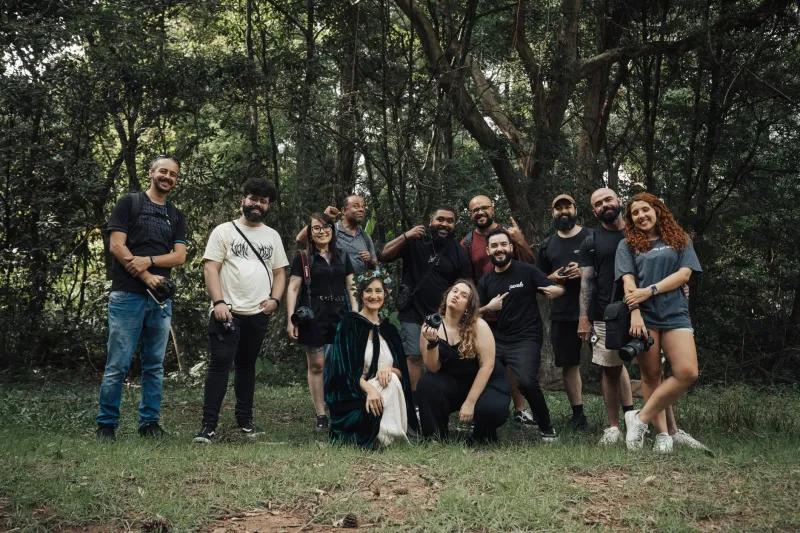
Spend enough time in any niche community — whether it's competitive gaming, vintage car restoration, indie music, ultramarathon running, or medieval reenactment — and you'll start to notice a pattern. There's a type. Not an official one, not one anyone would openly defend, but it's there. A certain look, a certain energy, a certain level of involvement in the scene. And almost everyone seems to be quietly angling toward it.
The thing is, nobody handed you a flyer. Nobody sat you down and said, "Here's what attraction looks like around here." But somehow, the message got through anyway. That's how social templates work — they spread through observation, repetition, and the very human tendency to absorb what the people around us seem to value.
The question worth asking isn't just whether this type exists. It's whether the type you're chasing is actually compatible with who you are, or whether you've been conditioned to pursue it because everyone else in your world is doing the same thing.
How Community 'Types' Get Built
It usually starts innocently enough. A few high-status or well-liked members of a community happen to couple up with people who share certain traits — maybe they're deeply knowledgeable about the niche, maybe they have a specific aesthetic, maybe they perform their passion in a particular way. Other members notice. They associate those traits with relationship success, with desirability, with belonging.
Over time, those traits get quietly elevated. They become signals of legitimacy. And then something subtle but significant happens: people stop evaluating potential partners on their own terms and start measuring them against the community's unspoken standard.
This isn't unique to any one group. It happens in CrossFit gyms, in cosplay circles, in craft beer communities, in academic departments, in local theater scenes. The specifics change, but the mechanism is the same: collective preference starts to masquerade as personal taste.
And the trickiest part? It genuinely feels personal. When you're drawn to someone who fits the community mold, it doesn't feel like social pressure. It feels like chemistry.
When the Template Doesn't Fit Your Life
Here's where it gets complicated. The community-approved type might be wildly incompatible with the life you actually want to live.
Maybe your scene valorizes people who are all-in — who eat, sleep, and breathe the niche, who organize their entire social calendar around it, who would never miss an event for something as mundane as a family obligation or a quiet weekend at home. And maybe you've been unconsciously pursuing that level of devotion in a partner, even though you personally crave balance, spontaneity, and a relationship that exists beyond the scene's edges.
Or maybe the aesthetic that gets celebrated in your community — the look, the wardrobe, the lifestyle markers — signals a set of values or priorities that quietly clash with yours in ways you haven't fully examined.
When you're inside the community, these mismatches can be hard to see. The social reward of dating someone the scene approves of is real. There's a kind of status in it, a sense of legitimacy. But status and compatibility aren't the same thing, and confusing the two is one of the quieter ways people end up in relationships that look right from the outside and feel hollow on the inside.
The Organic vs. Constructed Question
It's worth sitting with this for a second: are community preferences organic, or are they socially constructed?
Honestly? Both, and that's what makes them so hard to untangle.
Some of what draws niche communities together is genuinely organic — shared values, shared rhythms, a common language around something you all care about. Those are real foundations for attraction. But layered on top of that is the constructed stuff: the aesthetic hierarchies, the unspoken rules about what kind of enthusiasm counts, the sense that certain personality archetypes are inherently more dateable within the scene.
The organic layer can support real connection. The constructed layer often just narrows your pool in ways that have nothing to do with actual compatibility — and everything to do with social signaling.
Learning to tell the difference between the two is genuinely useful. Ask yourself: do I want this person because of how they make me feel, or because of how being with them makes me look within my community? It's an uncomfortable question. It's also one of the more clarifying ones you can ask.
Breaking the Pattern Without Leaving the Scene
Recognizing this dynamic doesn't mean you have to abandon your community or start dating outside your niche entirely (though that's always an option worth considering). It means getting more deliberate about separating your personal needs from your community's collective preferences.
A few things that can actually help:
Notice who you're attracted to versus who you think you should be attracted to. These can feel identical in the moment, but if you slow down and pay attention, there's usually a difference. One comes with ease and curiosity. The other comes with a subtle sense of performance.
Get honest about your non-negotiables — the ones that have nothing to do with the niche. How do you want to spend a Sunday morning? What does conflict resolution look like in your ideal relationship? Do you want kids, pets, a busy social life, a quiet one? These questions exist completely outside your scene, and your answers matter just as much as shared passion.
Pay attention to how you feel around someone when the niche isn't present. Strip away the events, the shared references, the community context — and then ask yourself if there's still something real there. Some connections survive that test beautifully. Others reveal themselves as mostly situational.
Be a little suspicious of instant scene-approval. When someone in your community immediately gets labeled as a catch, it's worth examining why. Is it because they're genuinely wonderful, or because they're a perfect embodiment of the template? Those aren't always the same person.
The Relationship That Doesn't Perform for Anyone
The best relationships — the ones that actually hold up — tend to be quietly resistant to external validation. They're not built to impress the scene. They're built around two people who genuinely work together, who complement each other in ways that have nothing to do with how they're perceived at the next meetup or convention or event.
That kind of relationship is harder to find when you're unconsciously auditioning partners for a role your community wrote. But once you recognize that the role exists — once you can see the template for what it is — you get to make a real choice about whether it's actually what you want.
And more often than not, what you actually want is something a little more specific, a little more personal, and a lot more yours than anything your scene could have designed for you.